AI Chatbot Marketing Strategy For B2B Businesses: A Complete Growth Guide
A practical B2B guide to AI chatbot marketing. Discover how to attract decision-makers, build a strong pipeline, and drive revenue using multi-channel strategies like content marketing, paid campaigns, and targeted outreach.

Published Date: April 2, 2026
The AI chatbot market is experiencing explosive growth with industry reports estimating that it will surpass $20 billion by the end of this decade driven by increasing demand for automation, personalization and real time engagement.
But creating and developing a chatbot is not the final win. Many chatbots fail even if they have much advanced features and good user interface than other chatbots in the market.
But why it happens?
One of the main cause can be the unstructured and improper marketing of a chatbot. Many businesses and startups think that developing user relevant and overall better interface chatbots can stand out in the market.
They think that the development of a chatbot is the ultimate final goal until and unless they realize that the chatbot developed is not even reaching the market properly and then their final goal and strategy become their undeniable mistake.
The answer is simple. No chatbot can scale and grow if there is no proper marketing strategy for it. Along with the development of a chatbot, marketing of the chatbot also plays a highly crucial role. Marketing helps the chatbot reach it’s potential target audience along with standing out in the market.
Want more demos, leads, and paying customers for your AI chatbot?
Work with a team that understands both AI chatbot development and B2B marketing. We don’t just drive traffic we build systems that generate pipeline, close deals, and scale your growth.
Pre – Requisites For Startups & B2B Businesses
- Choose your category early — niche or multi category will define your entire growth plan and overall results.
- High-Intent customer targeting – You need to reach decision makers who are actively looking for solutions – not just generate random traffic.
- Conversion-Focused Funnel – Traffic alone is useless without a system that converts visitors into demos, signups or paying customers.
- Strong messaging that sells outcomes – If your messaging focuses on features instead of ROI (leads, revenue, automation), you will lose potential buyers.
- Multi channel distribution plan – Relying on one channel (like just ads or just SEO) limits growth, actual scaling requires a combination of channels.
- Data- tracking & Optimization Setup: Without tracking conversions, user behaviour and campaign performance, scaling becomes guesswork.
- The overall cost to hire our marketing team can vary around the price range of $1,800 to $2,500 also depending on the actual cost per feature.
Modern chatbot solutions come in various forms and types each designed to solve specific business problems. This includes customer support chatbots that automate queries at scale, lead generation and sales chatbots that convert website visitors into prospects, SaaS onboarding bots that improve user activation. Along with that, AI copilots that assist teams internally and more advanced solutions like AI companion-style chatbots focused on engagements and retention. Each type of chatbots have it’s own marketing strategy style.
Are you a startup or business looking to grow and scale your already developed ai chatbot. Choosing the right company can make a big difference in the overall growth your startup and business.
At SEO Circular, we have experience in developing and working with a wide range of AI chatbot solutions – from lead generation and automation bots to advanced platforms like Candy AI-style clones and soulmate inspired AI applications. This gives us a deep understanding of both the technical and marketing side of chatbot businesses.
We can develop advanced futuristic chatbots. Along with development, we also have efficient marketing strategies that businesses and startups can use to scale and promote chatbots.
Who Needs An AI Chatbot Marketing Strategy?
- B2B SaaS startups launching a chatbot product
- Enterprise adding AI chatbots to their product stack
- Agencies offering AI chatbot Services to clients
- Niche chatbot builders targeting specific industries
- Businesses struggling with low chatbot adoption
AI Chatbot Marketing Strategy Guide For Startups And B2B Businesses
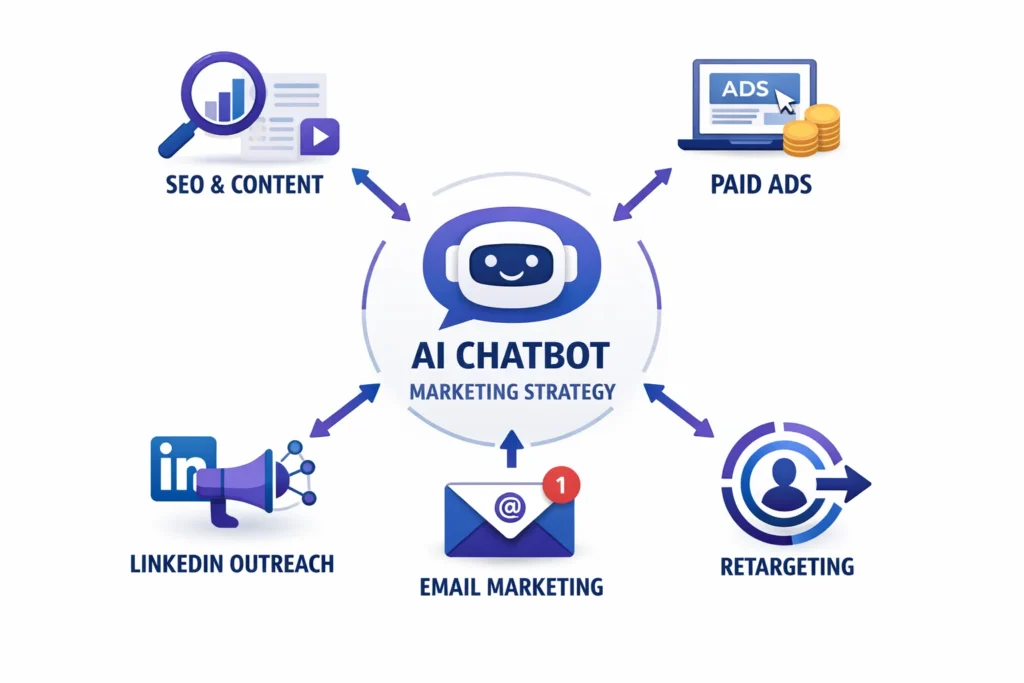
For B2B businesses, marketing an AI chatbot is not about running random campaigns and hoping for results. It requires a structured, multi-channel strategy that speaks directly to decision-makers, builds trust and drives measurable pipeline growth. Below is a breakdown of the core strategies a marketing team should execute.
1. Content & SEO Marketing
- Content and SEO these two are your long-term growth engine. It positions your chatbots as the go-to solution when decision-makers are actively searching for automation tools.
- Target high-intent keywords like “AI chatbot for B2B sales”, “customer support automation software” or “chatbot for lead generation” to attract buyers already in research mode.
- Create comparison and use-case content such as “TOP AI Chatbots For B2B Businesses in 2025” or “How AI Chatbots Reduce Support Costs by 40%” – these rank well and convert better than generic blogs.
- Publish ROI-driven case studies showing real numbers – leads generated, cost saved response time reduced.
- Build topic clusters around your niche so your website becomes an authority in the AI chatbot space, improving both rankings and credibility.
2) Paid Ads & Demand Generation
Paid ads accelerate what organic content builds slowly. For B2B chatbot marketing, precision targeting matters more than broad reach.
- Run Google Search Ads targeting bottom of funnel keywords where buyers are actively comparing solutions and ready to book a demo.
- Use LinkedIn Ads to target by job title, company size and industry – reaching CTOs operations heads and product managers who are the actual decision-makers.
- Launch retargeting campaigns for visitors who landed on your pricing or demo page but did not convert – these are your warmest leads.
- Promote gated assets like ROI calculators, chatbots audit templates or whitepapers through paid channels to capture high quality leads into your funnel.
3) Social Media & LinkedIn Outreach
For B2B chatbot marketing, LinkedIn is your most valuable social channel. It where your buyers spend their professional time.
- Post thought leadership content regularly – insights on AI trends, automation ROI, chatbot implementation tips to build authority and stay top of mind with your target audience.
- Run direct outreach campaigns where your team connects with ideal customer profiles, starts conversations and offers value before pitching not the other way around.
- Share client wins and product updates as short posts or carousels to build social proof and keep your audience engaged with real results.
- Engage in relevant LinkedIn groups and comment sections where your target buyers are already having conversations about automation and AI tools.
4) Email & Nurture Campaigns
Most B2B buyers do not convert on the first touchpoint. Email nurture keeps your chatbot top of mind through their entire decision-making journey.
- Segment your email list by industry, company size or buyer stage so every email feels relevant and personalised – not generic broadcast messaging.
- Build a lead nurture sequence that starts with education then moves to social proof and ends with a clear call to action like booking a demo or starting a free trial.
- Send behaviour triggered emails based on actions – if a lead visits your pricing page then send a case study. If they watch a demo video, follow up with a comparison guide.
- Run re-engagement campaigns for cold leads with a compelling hook – a new feature, a limited offer or a relevant industry stat that brings them back into the funnel.
Mistakes To Avoid While Marketing Your Chatbot
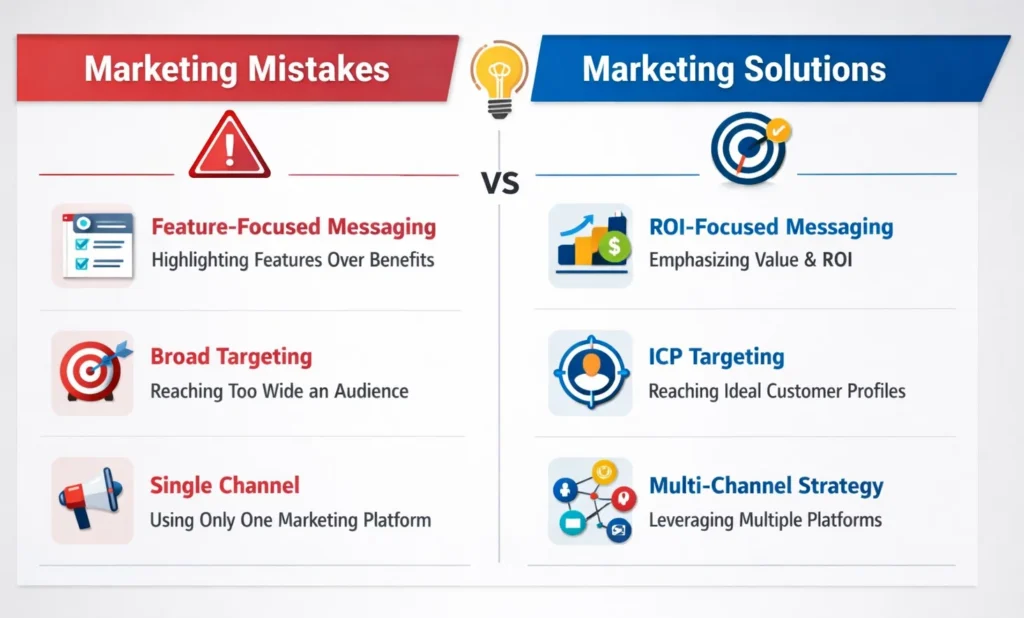
No matter how much advanced your AI chatbot is, It can fail if the marketing behind it is built on the wrong assumptions. Here are the five most common mistakes B2B Businesses and startups make and what to do instead.
1. Marketing Features Instead Of Outcomes
Talking about your chatbot’s NLP capabilities or integrations means nothing to a B2B buyer. What they actually care about is how many leads it generates, how much support cost it cuts and how fast it delivers ROI. Always lead with outcomes not features.
2. Targeting Everyone Instead Of The Right Decision Makers
Broad targeting wastes budget and attracts the wrong audience. If your chatbot is built for B2B then your market should be specifically focused on specific job titles, industries and company sizes – not generic audiences who will never convert.
3. Relying On A Single Marketing Channel
Betting everything on just SEO or just LinkedIn ads create a weak or fragile growth strategy. If that one channel dips, your entire pipeline dries up. A sustainable chatbot marketing strategy always runs multiple channels in parallel.
4. Skipping The Nurture Process
B2B buyers rarely convert on the first touchpoint. If your strategy ends at lead generation without a follow up nurture sequence – emails, retargeting, case studies – you are leaving the majority of your pipeline on the table.
5. Not Tracking The Right Metrics
Vanity metrics like impressions and followers do not generate or grow revenue. If your team is not tracking demo bookings, cost per qualified lead, conversion rates and pipeline value you are essentially scaling blind with no real direction.
What Does It Actually Cost To Have A Marketing Team?
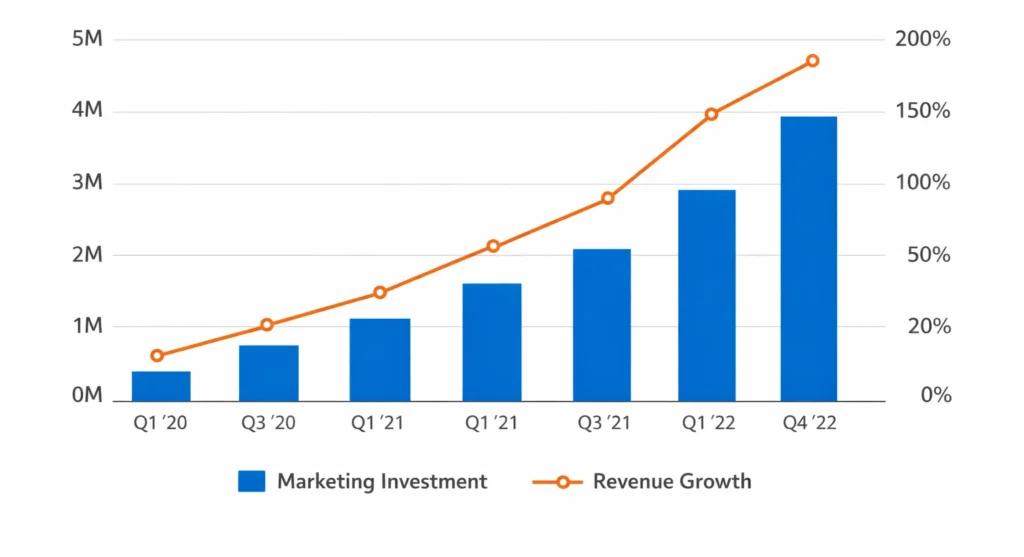
One of the most common questions B2B businesses ask before committing to a marketing strategy is simple — what will this actually cost us? The answer depends on the scope of work and the channels you are targeting also the resources involved in it. Here is a transparent and detailed breakdown of what you can expect when hiring a dedicated AI chatbot marketing team from SEO Circular.
Core Monthly Retainer
The foundational cost of having our full marketing team managing your chatbot’s growth — covering strategy, execution, content, campaigns and reporting — falls within a monthly range of $1,800 to $2,500. This covers your core team operations and is the base investment required to run a structured, multi-channel marketing strategy consistently.
Let’s have a look at the cost breakdown table in which you will get to know that how much SEO Circular will cost a startup while offering their marketing services and team.
Detailed Cost Breakdown Table
| Service | Cost | Timeline / Frequency |
| Core Marketing Team Retainer | $1,800 — $2,500 | Monthly |
| SEO Manager | $500 | Monthly (50 hours/month) |
| PR & Brand Visibility | $500 per resource | One-time yearly cost |
What Each Cost Covers
Core Marketing Team ($1,800 to $2,500/month) — This includes your full marketing operations — campaign management, content creation, paid ad execution, LinkedIn outreach, email nurture and performance reporting across all channels.
SEO Manager ($500/month) — Dedicated SEO management at 50 hours per month covering keyword research, on-page optimization, content planning, backlink strategy and monthly ranking reports to drive consistent organic growth.
PR & Brand Visibility ($500 per resource, One Time Yearly) — A one-time yearly investment per resource dedicated to public relations — securing media mentions, managing brand positioning, press outreach and building authority in the AI chatbot space.
Total Estimated Investment
| Plan | Monthly Cost | Yearly Cost |
| Core Team Only | $1,800 — $2,500 | $21,600 — $30,000 |
| Core Team + SEO Manager | $2,300 — $3,000 | $27,600 — $36,000 |
| Core Team + SEO + PR | $2,800 — $3,500 | $33,600 — $42,000 |
For B2B businesses serious about scaling their AI chatbot in a competitive market, this is not an expense — it is a revenue generating investment. The right marketing team pays for itself through qualified leads, demo bookings and closed deals.
Measuring The Success Of Your AI Chatbot Marketing Strategy
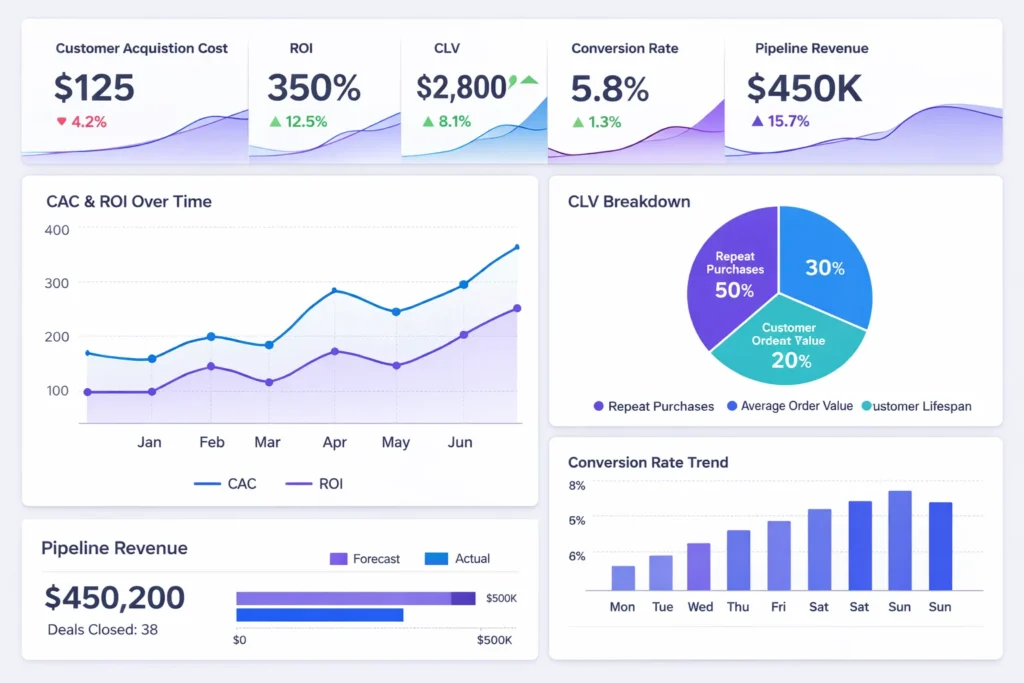
Spending on marketing without measuring the actual returns is like burning your overall budget with nothing to show for it. For B2B businesses, success is not measured in likes or impressions — it is measured in revenue, pipeline growth and return on every dollar spent. Here are the core ROI and revenue metrics your team must track consistently.
Customer Acquisition Cost
CAC tells you exactly how much you are spending to acquire one paying customer. Divide your total marketing spend by the number of new customers acquired in that period. If your CAC is higher than what a customer pays you, your strategy needs immediate restructuring.
Return On Investment
ROI is the most direct way to measure whether your marketing is working or not. Calculate it by subtracting your marketing investment from the revenue generated and dividing by the investment. A positive and growing ROI means your strategy is scaling profitably.
Pipeline Revenue Generated
Track the total value of deals that entered your sales pipeline directly as a result of your marketing efforts. This connects your marketing activity to actual business revenue and helps justify team and budget decisions.
Customer Lifetime Value (CLV)
CLV measures the total revenue a single customer brings over their entire relationship with your business. When your CLV is significantly higher than your CAC, it confirms that your marketing is attracting the right high-value customers worth investing in.
Revenue Per Channel
Not all marketing channels deliver equal returns. Tracking revenue generated per channel – SEO, paid ads, LinkedIn, email – tells you exactly where to increase investment and where to pull back making your overall spend far more efficient.
Tracking these metrics consistently gives marketing team a clear picture of what is working, what needs fixing and where the next phase of growth is coming from.
Future Trends In AI Chatbot Marketing
The AI chatbot space is evolving rapidly and the businesses that stay ahead of these shifts will have a significant edge over competitors still relying on outdated marketing approaches. Here are major trends shaping the future of AI chatbot marketing.
1. Hyper Personalisation At Scale
The next wave of chatbot marketing will move far beyond generic messaging. AI will enable marketing teams to deliver deeply personalised outreach tailored by industry, behaviour, buying stage and intent at a scale that was previously impossible without a massive team behind it.
2. Voice & Conversational Search Optimisation
As voice search and conversational AI continue to grow, chatbot marketing strategies will need to optimise for how buyers ask questions naturally not just type them. Businesses that adapt their SEO and content strategy for conversational search early will capture a significant share of organic traffic.
3. AI-Powered Performance Marketing
Paid advertising and demand generation will become increasingly automated and intelligent. From AI-driven ad copy testing to predictive audience targeting, marketing teams will rely more on machine learning to optimise campaigns in real time – reducing cost per lead while improving conversion rates.
Conclusion
Building a great AI chatbot is only half the battle. Without a structured marketing strategy behind it, even the most advanced chatbot will struggle to reach its potential audience and generate real revenue.
The businesses that win in this market are not just the ones with the best product — they are the ones that invest equally in marketing, positioning and the right team to execute it.
If you are ready to scale your AI chatbot the right way, the strategy starts here. Contact SEO Circular to scale your chatbot by having an efficient marketing strategy.
The chatbot market will not wait. Your strategy should not either.
Commonly Asked Questions: AI Chatbot Marketing Strategy
Most B2B businesses start seeing measurable results within 60 to 90 days of running a structured multi-channel strategy. Paid channels deliver faster results while SEO and content compounds over a longer period.
Basic marketing validation should begin early but heavy investment should wait until your chatbot solves a clear, proven problem for a defined audience. Marketing an unvalidated product accelerates burn without generating sustainable growth.
Case studies, ROI calculators and comparison guides consistently outperform generic blog content in B2B. Decision-makers need proof of results and clear differentiation before they commit to a demo or purchase.
Niche down your positioning, own a specific use case and build authority through hyper-targeted content and outreach. Trying to compete broadly against established players without a differentiated angle rarely works for new entrants.
Traditional influencer marketing has limited impact in B2B but partnering with industry thought leaders, analysts and niche community builders can significantly accelerate trust and visibility among your exact target audience.
Table of Content
- Pre – Requisites For Startups & B2B Businesses
- Who Needs An AI Chatbot Marketing Strategy?
- AI Chatbot Marketing Strategy Guide For Startups And B2B Businesses
- Mistakes To Avoid While Marketing Your Chatbot
- What Does It Actually Cost To Have A Marketing Team?
- Measuring The Success Of Your AI Chatbot Marketing Strategy
- Future Trends In AI Chatbot Marketing
- Conclusion
- Commonly Asked Questions: AI Chatbot Marketing Strategy