YouTube SEO Best Practices 2026
Discover the best YouTube SEO practices for 2026 to improve video rankings, increase watch time, boost audience engagement, and grow your channel with proven, data-driven strategies designed for long-term success and consistent visibility.

Published Date: March 17, 2026

Today, YouTube is no longer just a platform for part-time creators, freelancers, or side gigs. It has evolved into a full-scale business model and, for many, a primary source of income. From independent creators to large production houses, YouTube is now replacing traditional media channels and becoming a core engine for both entertainment and business growth. Entire industries—from education and finance to lifestyle and digital products—are now being built and scaled through YouTube.
If you are planning to start something around content, media, or audience-driven business, then you are already stepping into one of the fastest-growing and most profitable digital spaces. But let’s be clear—starting a YouTube channel is easy, growing it is not. Just like any other business, YouTube also requires strategy, consistency, and most importantly, strong SEO to succeed.
At SEO Circular, we have worked closely with multiple YouTube channels across different industries, helping them grow visibility, increase watch time, and generate real revenue. Based on our hands-on experience, we understand what actually works on YouTube and what doesn’t.
In this blog, I will break down how you can start a YouTube channel the right way and apply the best YouTube SEO practices to build long-term growth and consistent results.
Key Takeaways
- YouTube SEO help videos to rank and appear higher in search results and appear in recommended feeds which increases visibility and views.
- With 500+ hours of video uploaded every minute proper optimization is essential to stand out on YouTube.
- The YouTube algorithm focuses heavily on watch time, audience retention, click-through rate (CTR) and also on viewer engagement.
- Video titles which are optimized, descriptions, tags, thumbnails and captions help YouTube understand your content and rank it accurately.
- Keyword research allows creators to focus on topics that the audience is actively searching on YouTube.
- Thumbnails which are strong and important titles significantly improve click through rates and overall performance of the video.
- An engaging video with an engaging introduction helps in increasing watch time and keep viewers watch time longer.
- Encouraging likes, comments and shares sends positive engagement signals to the YouTube algorithm based on the type of the content.
- Within a specific niche, consistently publishing the content helps build the channel authority and long-term growth.
- The future of YouTube SEO will depend more on AI-driven recommendations, personalized content delivery and the behaviour signals of the audience.
Turn Your YouTube Channel Into a Growth Engine
Get expert-driven SEO strategies from SEO Circular Enterprise SEO Agency and start ranking, growing, and monetizing faster.
Book Your Free Consultation TodayImportance Of YouTube SEO
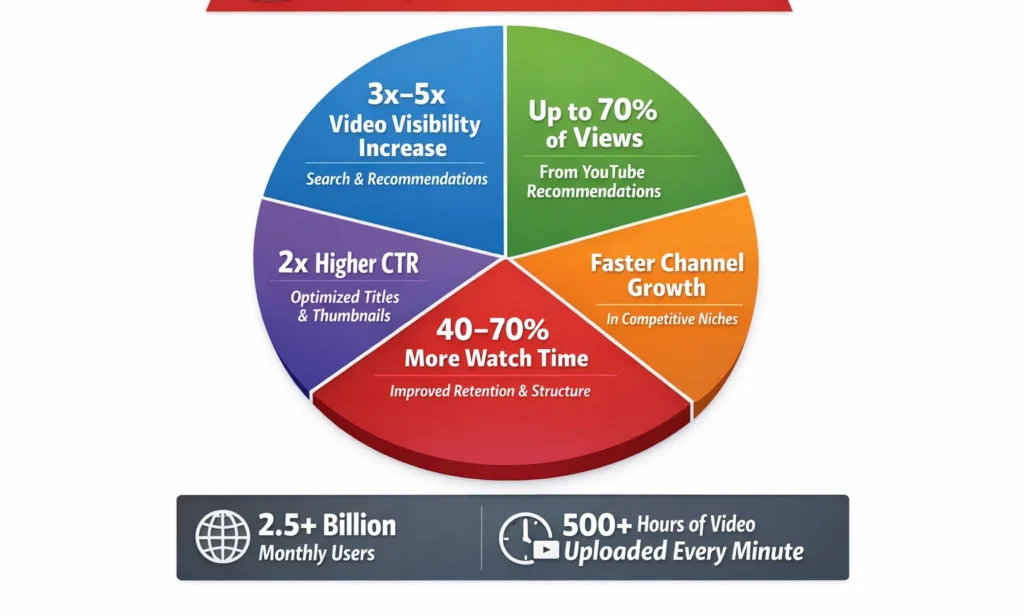
With the right YouTube SEO strategy, you can directly impact growth numbers:
- 3x–5x increase in video visibility through search + recommendations
- 2x higher click-through rate (CTR) with optimized titles & thumbnails
- 40–70% more watch time by improving retention and content structure
- Up to 70% of views can come from YouTube recommendations alone
- Faster channel growth in competitive niches with proper keyword targeting
YouTube currently has 2.5+ billion monthly users, with 500+ hours of video uploaded every minute. Without SEO, your content gets lost. With SEO, your videos get discovered, recommended, and scaled.
Breaking Down The YouTube Algorithm In 2026
| Factor | What It Means | Why It Matters | Optimization Tips |
|---|---|---|---|
| Click-Through Rate (CTR) | Percentage of people who click your video after seeing the thumbnail | High CTR signals strong interest | Use compelling thumbnails, strong titles, and curiosity-driven hooks |
| Watch Time | Total time viewers spend watching your video | Core ranking factor for YouTube | Create engaging content and keep viewers watching longer |
| Audience Retention | How much of your video people watch | Shows content quality and engagement | Use strong hooks in first 10 seconds and avoid drop-offs |
| Engagement (Likes, Comments, Shares) | User interactions with your video | Indicates value and relevance | Ask questions, encourage comments and shares |
| Session Time | Time a user stays on YouTube after watching your video | Boosts platform engagement | Create playlists and suggest related videos |
| Video Consistency | How often you upload content | Builds audience trust and algorithm favor | Maintain a regular posting schedule |
| Content Relevance | How well your video matches search intent | Helps YouTube rank your content correctly | Use proper keywords, tags, and descriptions |
| Channel Authority | Overall performance and trust of your channel | Strong channels rank faster | Focus on niche content and consistent quality |
| Personalization | Content shown based on user behavior | Drives individual recommendations | Target specific audience interests |
| Shorts & New Formats | Impact of YouTube Shorts and emerging formats | Expands reach and discovery | Use Shorts strategically to drive traffic to long videos |
The algorithm of YouTube has changed a lot over the years turning its focus from simple metrics like views to deeper indicators of viewer satisfaction and engagement. In 2026 the recommendation system of the platform is designed to analyse a large variety of signals to decide which videos should appear in search results, suggested videos and the homepage feed. The main goal is to show viewers the content that they are most likely to watch and enjoy.
One of the most important things that the algorithm looks at is metadata. In metadata we include things like video titles, descriptions and tags. Such type of elements in metadata help YouTube understand what the specific video is about and allow the platform to categorize it accurately. When creators use related and relevant keywords in their titles and also in descriptions then it becomes easier for the algorithm to match and relate the content with users searching for those topics. Captions and subtitles also play a major role also. They provide YouTube with additional context about the spoken content in a video also improving discoverability in both search and recommendations.
However metadata only is not enough. The algorithm of YouTube depends heavily on viewer engagement signals to know the quality and relevance of a video. Specific Metrics like watch time, audience retention, click-through rate (CTR), likes, comments and shares help the platform understand how viewers respond and interact with the content. For example, if viewers click on a video and watch a big part without leaving or skipping then the algorithm sees this as a strong sign that the content is valuable and worth recommending to more people.
User behaviour is another factor which is impossible to ignore. YouTube notices how viewers interact with videos on the platform. This also means including what they want to watch, how long they stay, what they skip and what they choose to watch next in content. These behavioural signals and signs help the recommendation system of the platform create personalized viewing experiences. If someone watches content about a specific topic then the algorithm will start suggesting more videos related to that interest. The platform also considers broader performance signals. If a video does well with a small group of viewers initially, generating good watch time, engagement and retention then it may be gradually shown to larger audience. This testing process helps YouTube decides whether the content deserves wider distribution or not.
The YouTube algorithm is no longer just about ranking videos for keywords in 2026. It focuses on understanding viewer satisfaction. Videos that keep audiences engaged, encourage interaction and align with viewer interests are much more likely to be recommended suggested. For creators this means that the successful growth on YouTube depends on a mix of strong metadata, engaging content and positive audience signals that show real value to viewers related to the overall content.
Key Ranking Factors That Influence YouTube SEO
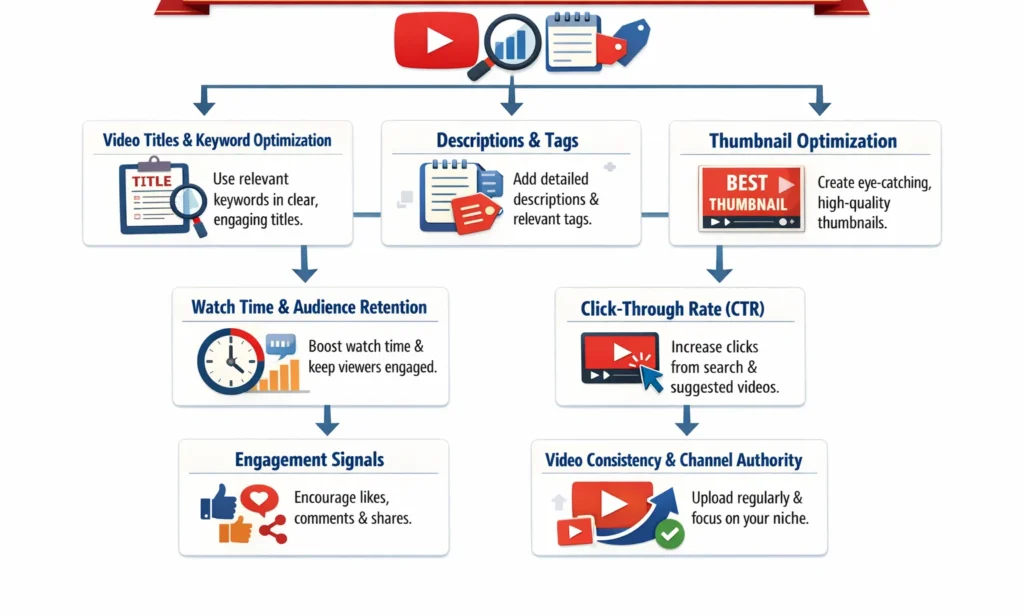
1) Video Titles and Keyword Optimization
Video titles are mainly for YouTube SEO. They help both viewers and the platform to actually understand the content of the video. By using relevant and related keywords in the title, it increases the chances of showing up in search results when users search for related topics. However the titles should not be overloaded with keywords. The best titles are clear, descriptive and naturally add the main keyword while leading viewers to click on the video.
2) Descriptions and Tags
Descriptions and tags give extra context to the platform which helps YouTube categorize and index a video. A well-written description explains what the video is about and can also add relevant keywords that support the topic including the niche. Through tags, YouTube understand related topics and improve the chances of the video appearing in search results or suggested videos along with similar content.
3) Thumbnail Optimization
Thumbnails also affect whether viewers click on a video majorly. A clear and visually enhanced thumbnail can highly boost click-through rate of the video. Thumbnails that use high contrast, readable text and expressive visuals are more likely to show in search results and recommendation feeds.
4) Watch Time and Audience Retention
Watch time notices how long viewers watch a video, while audience retention shows what percentage of the video viewers see. Videos that keep viewers engaged longer give signals to YouTube that the content is valuable. High watch time and strong retention usually improve the chances of a video being recommended to a larger audience.
5) Click-Through Rate (CTR)
Click-through rate shows how often viewers click on a video after seeing it in search results, on the homepage or in suggested video sections. A higher CTR shows that the title of the video and thumbnail appeal to viewers. When a video consistently attracts clicks, YouTube will promote it more often within its system recommendation.
6) Engagement Signals (Likes, Comments, Shares)
Engagement signals help YouTube see if the viewers are interacting with a video or not. Likes, comments and shares signal that the audience finds the content interesting. Videos that generate strong engagement often gain more visibility because the platform views these interactions as positive feedback from the viewers.
7) Video Consistency and Channel Authority
Consistency in uploading content affects the growth of the channel. Channels that regularly publish videos around a specific topic are more likely to build stronger authority in that niche. Over time YouTube becomes more confident in recommending content from channels that consistently produce relevant and engaging videos for targeted audience based on the specific niche.
Best YouTube SEO Practices For Ranking In 2026
Conducting YouTube Keyword Research
Keyword research matters a lot in YouTube SEO. It helps in understanding what the viewers are actively searching or watching on YouTube. Instead of choosing topics randomly through search behaviour creators can find subjects that are already on demand. One simple way to discover such keywords is by typing a topic into the YouTube search bar and then observing the auto suggested queries. These suggestions come directly from real user searches which makes them important indicators of what people want to watch.
Creators can analyse high performing videos in their niche to see what type of keywords appear in the titles, descriptions and tags. Choosing the suitable keywords make sure that the video matches with the intent of the audience and increases the chances of appearing in YouTube search results.
Optimizing Video Metadata
Metadata talks about the information attached to a video that helps YouTube understand its content. The most important metadata elements include titles, descriptions and tags. When these elements are optimized in a proper way then the algorithm can categorize the video more accurately and show it to the target audience.
The title should clearly explain what the video is about while naturally including the main keyword. Descriptions should also expand on the topic by summarizing what viewers will learn or see in the video. Tags provide additional context and help YouTube connect the video with related content all over the platform. Well-structured metadata improves discoverability and increases the chances of appearing in both search results and recommended videos.
Creating Engaging Thumbnails
Thumbnails play an important role in attracting viewers. While scrolling through search results or recommended videos, the thumbnail is often the first thing that they notice. A well-designed thumbnail can make the difference between a viewer clicking on a video or ignoring it.
Effective thumbnails are visually clear and relevant to the content. They often add bold visuals, strong contrast and easy to read text. The goal is to create a thumbnail that stands out while still accurately representing what the video is about. When thumbnails capture attention they can significantly improve the click through rate of the video.
Structuring Video Descriptions Properly
A well written video description provides important context for both viewers and the YouTube algorithm. The first few lines of the description are really important because they appear in search previews and help users quickly understand the content of the video.
Creators should start with a short summary explaining what the video covers and include relevant keywords naturally. More information such as links, timestamps and supporting details can be added later in the description. A detailed and informative description helps YouTube better understand the video and improves its chances of appearing in relevant searches.
Using Timestamps and Chapters
Timestamps and chapters allow viewers to go through different sections of a video easily. This feature is specifically helpful for longer videos that cover multiple topics. By dividing the video into clear sections viewers can jump directly to the part in which they are most interested.
From an SEO perspective, timestamps also help YouTube understand the structure of the video and the different topics discussed within it. This improves the overall user experience and can make the content more valuable for viewers who want to have quick access to specific information.
Adding Captions and Subtitles
Captions and subtitles enhance and improve accessibility and help huge audience understand the video. Many viewers watch videos without sound especially on mobile devices so captions make it easier for them to follow the content.
Captions also provide extra text that helps YouTube understand the spoken content within a video. This extra context can improve discoverability and allow the platform to match the video with related and relevant search queries more accurately.
Encouraging Viewer Engagement
Engagement signals such as likes, comments and shares help YouTube decide whether viewers find a video interesting. When viewers interact with content, it shows that the video is generating a response rather than being passively watched.
Creators can encourage engagement by asking questions, inviting viewers to share their opinions and encouraging them to leave feedback in the comments. Responding to comments can also help in building stronger connections with the audience and increase overall interaction.
Improving Watch Time with Better Video Structure
Watch time is one of the most important factors in YouTube SEO. It notices how long viewers stay on a video and show whether the content is engaging enough to hold their attention. Videos that keep viewers watching for longer periods are more likely to be recommended by the algorithm.
A strong video structure can significantly improve watch time. Starting with an engaging introduction, clearly explaining what viewers will gain from the video and managing a steady flow of useful information can help keep the audience interested. Avoiding long introductions and getting to the main point quickly also helps maintain viewer attention throughout the video.
Common SEO Mistakes That Can Hurt Your Ranking On YouTube
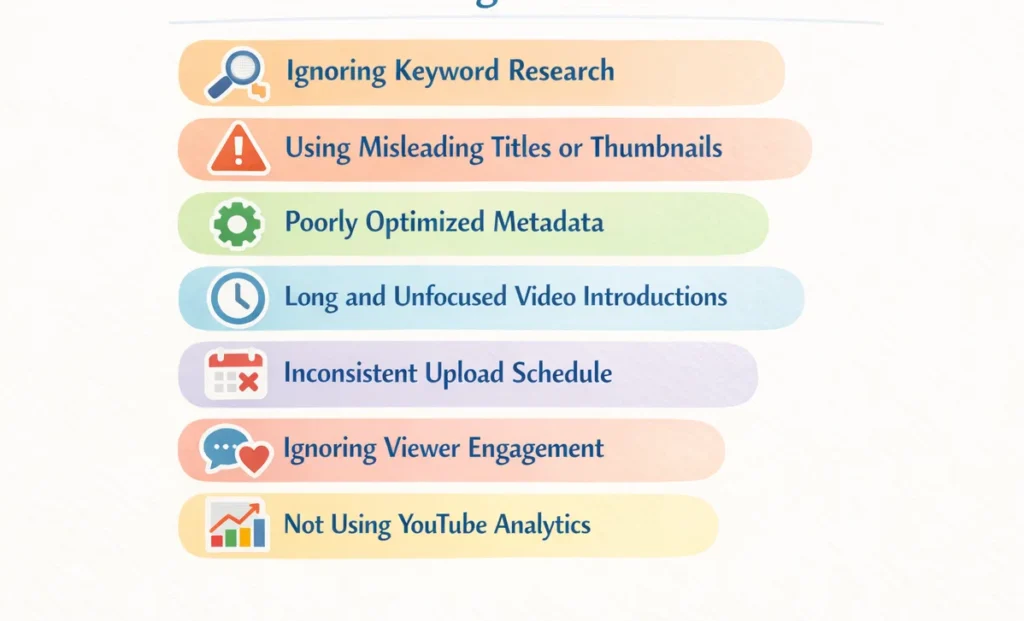
Even though creators follow many SEO practices, certain mistakes can prevent videos from performing well on YouTube. Understanding these common errors can help creators avoid problems that might reduce visibility, engagement and overall channel growth. By identifying and correcting these mistakes, creators can improve their chances of reaching a larger audience.
Ignoring Keyword Research
One of the most common mistakes are creating videos without researching what viewers are actually searching for. When creators choose topics without understanding search demand then their videos may not match the interests of the audience. Proper keyword research helps identify popular topics and make sure that the content aligns with real user queries.
Using Misleading Titles or Thumbnails
While attractive thumbnails and titles are important for gaining clicks, misleading viewers can harm a video’s performance and overall ranking. If viewers click on a video but quickly leave because the content does not match the title or thumbnail, audience retention will drop and will affect the content overall and also will give Low retention signals to the algorithm that the content may not be satisfying to viewers.
Poorly Optimized Metadata
Another common issue is neglecting or ignoring video metadata such as titles, descriptions and tags. If these elements are vague or there are missing relevant keywords, YouTube may struggle to understand the topic of the video. This can reduce the chances of the video appearing in search results or recommended feeds. This can drop the content overall in terms of visibility.
Long and Unfocused Video Introductions
Many creators lose viewers within the first few seconds of their videos because the introduction is too long or does not immediately capture the attention of the target audience. Since audience retention is an important ranking signal, failing to engage viewers early can negatively affect watch time and overall performance of the content.
Inconsistent Upload Schedule
Uploading videos irregularly can make it difficult to build a consistent audience. Channels that publish content regularly are more likely to gain or attract stronger viewer engagement and long-term growth. Consistency helps viewers know when to expect new content and strengthens the channel’s presence within a specific niche.
Ignoring Viewer Engagement
Some creators focus only on views and overlook the importance of audience interaction. Engagement signals such as likes, comments and shares signal that viewers find the content valuable. Not doing enough engagement can reduce the overall interaction level of a video and limit its overall potential reach.
Not Using YouTube Analytics
Another major mistake is not measuring or analysing performance data. YouTube provides detailed insights through its analytics tools, including metrics like watch time, audience retention and click-through rate. Ignoring these insights makes it harder to understand what works well and what needs improvement in future videos.
Conclusion
YouTube SEO plays an essential role in helping videos gain visibility in an increasingly competitive platform. With millions of videos being uploaded regularly, creators need to go beyond simply publishing content and focus on optimizing their videos so that YouTube can understand and recommend them to the right and relevant audience.
By applying key SEO practices such as proper keyword research, optimized metadata, engaging thumbnails and improving watch time and audience retention, creators can significantly improve their chances of ranking on YouTube. At the same time avoiding common mistakes and focusing on consistent, high-quality content helps build long-term channel growth.
Ultimately successful YouTube SEO is about combining smart optimization with valuable content that keeps viewers engaged. Creators who understand their audience and follow these practices will be better positioned to grow their presence and reach wider audiences on YouTube.
Important YouTube SEO Insights for Creators
Consistency matters more than quantity on YouTube. Uploading videos on a regular schedule whether weekly or biweekly helps the algorithm understand your channel activity and encourages viewers to return for new content.
Yes. Longer videos often produce more watch time which is a major ranking signal. However the main factor is keeping viewers engaged throughout the video rather than simply making it longer.
Hashtags help categorize videos and make them discoverable through hashtag searches. Using 10 –12 relevant hashtags related to your video topic is usually enough for better identification and discoverability.
YouTube SEO results can take a few days to several weeks, depending on competition, engagement and how well the video matches and aligns with the user search intent.
End screens and cards guide viewers to other videos or playlists on YouTube. They help keep viewers on the platform longer, increasing overall watch time and session duration.
Table of Content
- Key Takeaways
- Turn Your YouTube Channel Into a Growth Engine
- Importance Of YouTube SEO
- Breaking Down The YouTube Algorithm In 2026
- Key Ranking Factors That Influence YouTube SEO
- Best YouTube SEO Practices For Ranking In 2026
- Common SEO Mistakes That Can Hurt Your Ranking On YouTube
- Conclusion
- Important YouTube SEO Insights for Creators