How Emotional Intelligence Drives Brand Success?
Emotional intelligence in branding helps B2B companies connect with customers on a deeper level. This blog explains how EI in marketing builds trust, improves customer experience, and drives long-term brand growth through emotion-driven strategies.

Published Date: December 22, 2025
Emotional intelligence in branding helps companies understand how customers feel, think, and respond to every touchpoint. In today’s competitive B2B market, businesses cannot win only with features and pricing. They must build trust and create a real emotional connection with their audience. Studies show that over 70% of B2B buying decisions are influenced by emotional factors, not logic alone.
Brands that use emotional intelligence and brand success as a combined strategy are more likely to increase loyalty, improve customer experience, and stand out from competitors. Emotion-driven branding strategies allow the marketing team to design messages that feel personal and meaningful. According to research, emotionally connected customers are up to 52% more valuable than those who are just satisfied.
When companies invest in EI in marketing, they improve communication, strengthen relationships, and drive higher engagement. Emotional branding turns customers into long-term partners who stay with the brand and recommend it to others. Brands that focus on emotional connection see higher retention rates and stronger word-of-mouth growth.
Large and rapidly changing sectors will continue to rely on emotional intelligence as a major factor in brand growth and mission keeping. In fact, trust-led brands grow revenue up to two times faster than brands that compete only on price or features. The blog post will delve into the meaning of emotional intelligence in the business sector and its impact on performance.
To get the full picture, keep on reading.
Key Takeaways
- Emotional intelligence in branding helps B2B brands understand customer feelings, not just their needs and budgets.
- Brands that use emotional branding build trust faster, making it easier for customers to choose and stay with them.
- EI in marketing improves communication, creating messages that feel human, clear, and respectful.
- Emotion-driven branding strategies increase customer loyalty, leading to repeat business and long-term relationships.
- Emotional intelligence and brand success go hand in hand, helping businesses stand out in competitive markets.
- Using data and customer insights strengthens emotional connections, while keeping brand messaging personal and relevant.
- The future of B2B branding is human-focused, where empathy, trust, and experience matter as much as product features.
What does Emotional Intelligence Mean for Modern Brands?
Modern B2B brands use emotional intelligence in branding to act with empathy and understand customer needs at every stage of the journey. Instead of pushing messages, smart brands listen first. They study how customers feel when they explore products, talk to sales teams, or interact with support teams.
Emotional intelligence and brand success work together when brands show clarity, transparency, and respect. Buyers choose partners who make decision-making easier and who communicate humanely. This is what EL in marketing matters for every B2B leader.
Emotion-driven branding strategies help businesses create experiences that match the customer’s goals and challenges. When brands respond to emotions like trust, confidence, and security, they stay top of mind during the purchase process. This approach leads to better brand loyalty and stronger revenue growth.
Emotional branding turns companies into more relatable partners. It builds long-lasting relationships based on understanding, not pressure.
The Role of Emotional Intelligence in Brand Success
The incorporation of emotional intelligence in branding strategies leads to better company performance and more solid customer ties. By applying EI in marketing, companies not only provide value through their products or services but also go beyond that. Read below about the ways EI is contributing to the branding triumphs:
Builds Trust Faster
Emotional intelligence in branding helps companies build trust by showing genuine care for customer needs. When brands communicate with empathy and honesty, customers feel respected and confident in their decisions, which accelerates business relationships.
Improve Customer Experience
Emotion-driven branding strategies allow brands to design touchpoints that feel smooth and personalized. When businesses respond to customer emotions in real-time, they reduce friction and create a memorable experience that drives customer satisfaction.
Strengthen Brand Loyalty
When customers feel emotionally connected to a brand, they stay longer and buy more often. Emotional branding supports loyalty programs, improves retention rates, and encourages repeat purchases that sustain long-term growth.
Increase Positive Brand Perception
Emotional intelligence and brand success work together when companies act human and authentic. Brands that represent customer values earn higher credibility and trustworthy reputations, making them more attractive than competitors in the same market.
Boost Engagement Across Channels
EL in marketing helps brands create relatable and meaningful content. When messaging reflects customer emotions and motivations, audiences interact more, share more, and stay engaged across social media, email, and web platforms.
Enhances Sales and Revenue
The buying journey is accelerated and simplified through the use of emotion-driven techniques. Customers who perceive that their feelings are taken into account will more readily pick the brand, resulting in higher conversion rates and increased revenue performance.
Differentiates Brands in Competitive Markets
Emotional intelligence in branding gives companies a unique advantage when product features look similar. Emotional value helps brands stand out, influence decision-making, and become the preferred choice in crowded B2B spaces.
Empowers Internal Teams
Leadership with an EI focus fosters a good work atmosphere and uplifts the spirits of the employees. Teams that have a sense of appreciation and emotional support are more productive in service delivery and also in maintaining a positive image of the brand during every customer interaction.
Integrating EI in Marketing
- Start by listening to customers: Collect feedback from surveys, emails, reviews, and support conversations to understand customer emotions and concerns.
- Use data to understand behavior and feelings: Analyze user actions, engagement patterns, and drop-off points to learn where customers feel confused, stressed, or confident.
- Create human and clear messaging: Replace aggressive sales language with supportive and simple communication that guides customers instead of pressuring them.
- Personalize marketing experiences: Deliver relevant content based on customer needs and stages in the buying journey to make communication feel personal and meaningful.
- Align marketing with sales and support teams: Ensure all teams communicate with the same tone and empathy to create a consistent emotional experience.
- Address customer fears and risks clearly: Use emotional intelligence in branding to reduce uncertainty and build confidence in decision-making.
- Measure emotional impact regularly: Track engagement, sentiment, and retention to understand how EI in marketing improves trust and long-term growth.
EI vs Traditional Branding
| Traditional Branding | Emotional Intelligence (EI) Branding |
|---|---|
| Focuses on product features and specifications | Focuses on customer feelings and needs |
| One-way communication from brand to customer | Two-way communication with active listening |
| Sales-driven messaging | Trust-driven and relationship-focused messaging |
| Highlights price and functionality | Highlights value, confidence, and outcomes |
| Uses formal or technical language | Uses clear, human, and empathetic language |
| Short-term conversion focused | Long-term loyalty and retention focused |
| Limited personalization | Personalized experiences based on customer emotions |
| Reactive customer support | Proactive and empathetic customer support |
How to Build Emotional Intelligence in Branding?
Brands that use emotional intelligence in branding build better relationships and improve long-term success. Here are smart and practical ways to use EI in marketing and emotional branding:
Train Teams to Understand Customer Emotions
Teach teams to listen actively and show empathy during every interaction. When employees understand emotional signals, they improve communication, solve problems faster, and deliver a more positive customer experience.
Use Customer Data to Personalize Experience
Analyze behaviour, preference, and feedback to send the right message at the right time. Personalization shows customers that the brand values their needs and simplifies decision-making.
Align Brand Voice With Customer Values
Utilize a plain and human-like manner that shows concern for the audience’s interests. When brand messaging aligns with customer values, it creates a bond of credibility and emotional trust.
Improve Internal Collaboration and Culture
Emotional intelligence starts inside the company. Open communication nd supportive culture motivate employees to serve customers better and protect the brand’s reputation.
Create Emotion-Driven Branding Strategies
Focus on emotional benefits like security, confidence, and growth. When branding highlights outcomes customers want, it influences buying behaviour and strengthens brand loyalty.
Track Emotional Impact With Real Metrics
Measure customer sentiment, engagement, and retention to learn how emotions shape buying decisions. These insights help bbrandsoptimize strategies and maintain meaningful connections over time.
How to Measure Emotional Intelligence and Brand Impact?
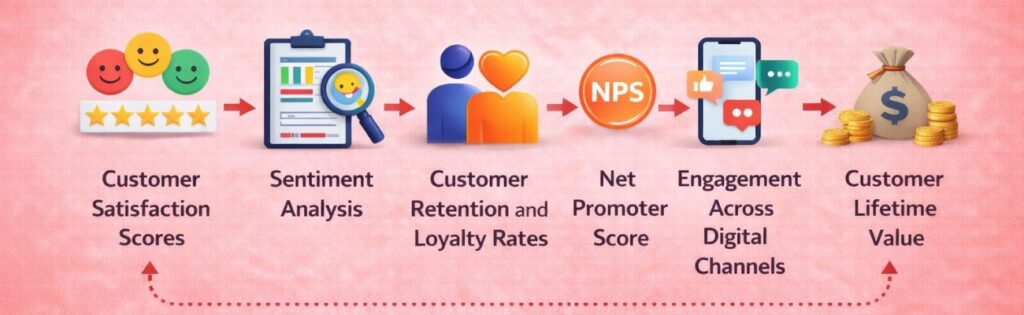
BB brands can gauge emotional intelligence by tracking how customers think, feel, and act throughout their journey—revealing how emotional branding drives loyalty and growth.
Customer Satisfaction Scores
Use surveys and feedback to understand how customers feel after interactions. Higher satisfaction means the brand shows empathy, solves problems quickly, and leaves a positive emotional impression.
Sentiment Analysis
Monitor social media, reviews, and support conversations to learn how customers talk about the brand. Positive sentiment signals trust and a strong emotional connection, while a negative tone reveals improvement needs.
Customer Retention and Loyalty Rates
Track how long customers stay and renew contracts. When emotional branding works, loyalty increases because customers feel valued and confident in the partnership.
Net Promoter Score (NPS)
Measure how likely customers are to recommend your brand to others. Rising NPS proves emotional intelligence and brand success are aligned to create advocates who support business growth.
Engagement Across Digital Channels
Analyze clicks, shares, comments, and interaction time. Strong engagement means marketing content connects emotionally, motivates action, and keeps the audience involved with the brand.
Customer Lifetime Value (CLV)
Check revenue earned from each customer over the entire relationship. Higher CLV shows that emotional intelligence drives trust, repeat purchases, and long-term business profit.
Real Examples of Emotional Intelligence in B2B Branding
B2B brands that apply emotional intelligence focus on how customers feel during every interaction. Below are clear, practical examples:
- SaaS onboarding experience: A software company simplifies its onboarding process, uses friendly language, and offers step-by-step guidance. This reduces user anxiety and builds early trust.
- Consulting and service brands: Instead of promoting services, consultants highlight client challenges and risks, showing understanding before offering solutions.
- Customer support interactions: Support teams respond with empathy, explain issues clearly, and provide realistic timelines. Customers feel respected even when problems occur.
- Enterprise sales communication: Sales teams listen first, address buyer concerns, and remove pressure from decision-making. This builds confidence and long-term partnerships.
Emotional Branding Trends Shaping the Future
Emotional branding continues to evolve as customer expectations rise and digital experiences expand. B2B companies are using emotional intelligence in branding to stay relevant, build trust, and create deeper relationships. Here are key trends shaping the future of emotional branding:
Hyper-Personalization at Every Touchpoint
Brands are using data and AI to deliver personalized content, pricing, and recommendations. When messaging matches customer goals and emotions, decision-making becomes easier and faster.
Human-Centric Brand Voices
EI in marketing encourages brands to speak clearly and honestly. A human tone builds trust, reduces friction, and helps buyers feel supported throughout the journey.
Purpose-Driven Communication
Customers expect brands to show strong values. Emotional intelligence and brand success align when companies talk openly about sustainability, ethics, and community impact.
Predictive Emotion Analytics
Businesses are investing in tools that read customer behavior and sentiment. These insights help teams create emotion-driven branding strategies that influence loyalty and satisfaction.
Interactive and Immersive Experiences
From interactive content to virtual product demos, brands are making digital journeys more engaging. Strong emotional branding helps customers feel more confident before buying.
Employee-Driven Brand Advocacy
Happy teams create positive customer experiences. When internal culture supports emotional intelligence, employees share that energy with clients and boost brand reputation.
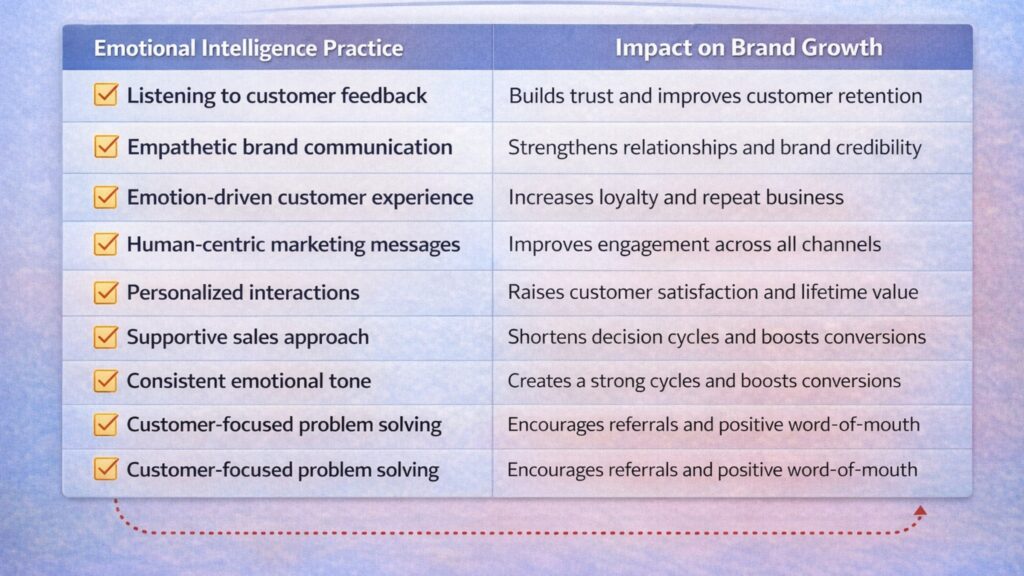
How Emotional Intelligence Improves Long-Term Brand Growth
Partner With SEO Circular to Build Emotionally Intelligent Brands
SEO Circular helps B2B companies use emotional intelligence in branding to build trust, improve visibility, and drive revenue. We apply emotion-driven branding strategies, advanced SEO, and customer-centric content to create strong digital experiences that influence decision-making.
Our team focuses on real customer needs, human-centric communication, and AI-powered insights to boost engagement and retention. From brand storytelling to web design and performance tracking, we deliver measurable growth across every channel.
Choose SEO Circular to build a brand that customers trust, remember, and prefer in competitive markets. Let’s build a brand that people trust, remember, and choose.

Conclusion
Emotional intelligence, in branding, assists B2B firms in consolidating trust, loyalty, and long-lasting customer relationships. By incorporating EI in marketing and emotional branding, brands not only reach out to customers but also provide meaningful experiences that eventually lead to customer engagement and increased sales. The future is for those companies that handle the situation with empathy and appeal to both the brain and the heart. The humane brands will be the market leaders.
Emotional intelligence helps B2B brands understand buyer motivations beyond logic and pricing. By addressing emotions such as trust, confidence, and risk reduction, companies can shorten sales cycles and build stronger decision-maker relationships.
B2B buyers may rely on data, but emotions still drive final decisions. Emotional branding reduces uncertainty, increases confidence, and makes brands feel like long-term partners rather than just vendors.
No. Emotional intelligence impacts sales, customer support, leadership, and internal culture. When all departments adopt EI principles, brand messaging becomes consistent and customer experiences improve across touchpoints.
Results vary, but many brands notice improved engagement and customer satisfaction within a few months. Long-term benefits include higher retention rates, stronger loyalty, and increased lifetime customer value.
AI helps analyze customer behavior, sentiment, and engagement patterns at scale. When combined with human insight, AI enables more accurate personalization and emotionally relevant brand communication.
Table of Content
- Key Takeaways
- What does Emotional Intelligence Mean for Modern Brands?
- The Role of Emotional Intelligence in Brand Success
- Integrating EI in Marketing
- EI vs Traditional Branding
- How to Build Emotional Intelligence in Branding?
- How to Measure Emotional Intelligence and Brand Impact?
- Real Examples of Emotional Intelligence in B2B Branding
- Emotional Branding Trends Shaping the Future
- How Emotional Intelligence Improves Long-Term Brand Growth
- Partner With SEO Circular to Build Emotionally Intelligent…
- Conclusion