Selling carbon credits globally is no longer limited to large corporations. In this guide, we explain how startups, brokers, and sustainability platforms can sell carbon credits worldwide, attract buyers, and build a scalable revenue system using SEO, trust, and structured marketing.
Published Date: March 31, 2026
Selling carbon credits worldwide is no longer limited to large corporations or government-backed projects. Today, startups, sustainability platforms, brokers, and even niche marketplaces are entering this space. And the demand is real. According to market data, the global carbon credit market is expected to cross $100 billion by 2030, driven by corporate net-zero commitments and regulatory pressure.
To sell carbon credits globally, you need verified credits, a global sales channel, and an SEO-driven strategy to attract buyers.
At SEO Circular, we work with climate tech platforms and carbon marketplaces, and we see a clear pattern. Many businesses have access to carbon credits but struggle with visibility, buyer trust, and global reach. Hire us a marketing partner, we will help you to seel your Carbon globally. Schedule a free call
So the real question is not just how to sell carbon credits, but how to sell them worldwide consistently, safely, and at scale.
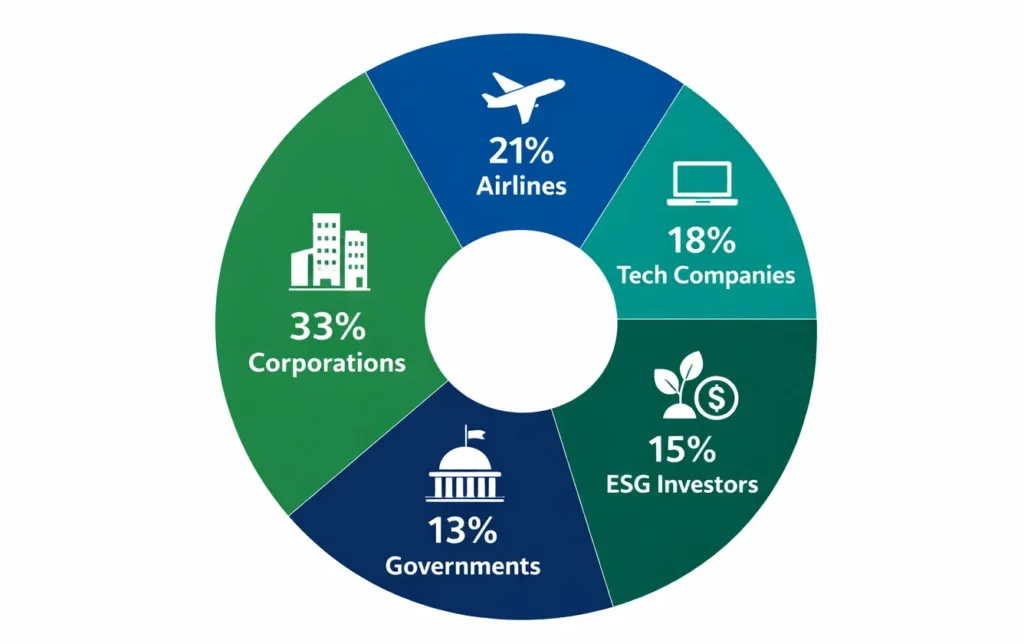
Global carbon credit demand is driven by corporations, airlines, and ESG-focused investors.
Key Takeaways
Carbon credits demand is growing globally
Selling requires more than just listing
SEO plays a major role in visibility
Trust and transparency drive conversions
Structured systems outperform random marketing
Global sales require localization and targeting
Turn Carbon Credit Traffic into Revenue 🚀
Want to rank for high-intent keywords like sell carbon credits or carbon credit marketplace and generate real leads?
We help clean tech and sustainability brands scale visibility and conversions.
✔ High-Intent Traffic✔ Lead Generation✔ ROI-Focused SEO
What Are Carbon Credits and How Global Selling Works
Carbon credits represent 1 ton of CO₂ removed or reduced from the atmosphere. These credits can be bought by companies to offset their emissions.
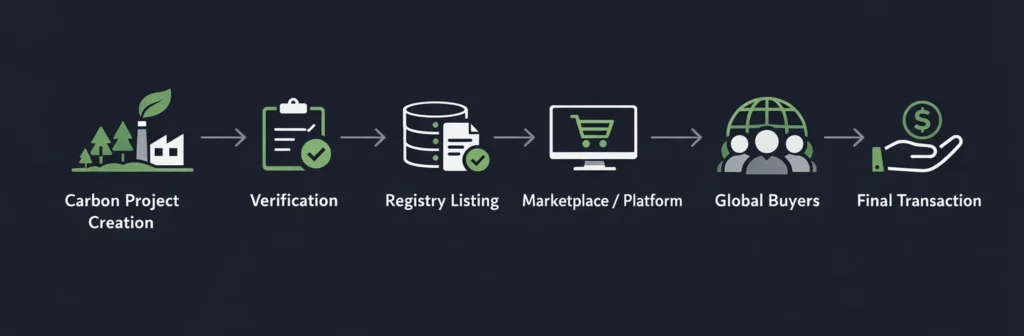
Here’s how global selling works in simple terms:
A project (forest, renewable energy, carbon capture) generates credits
These credits are verified by standards
Credits are listed on registries or marketplaces
Buyers from anywhere in the world purchase them
Sounds simple, but this is where most businesses struggle. The system exists, but distribution and visibility don’t.
We see this problem very often. Many platforms rely only on listing credits, expecting buyers to come automatically. That rarely works.
Types of Carbon Credits You Can Sell
Not all carbon credits are the same. Understanding this is important if you want to sell globally. Different buyers look for different types of credits based on their goals, compliance needs, and budget. If you don’t position your credits correctly, even good projects struggle to sell.
Here’s how each type works in real-world selling scenarios.
1. Voluntary Carbon Credits
Used by companies for sustainability goals
No legal obligation
High flexibility in pricing and marketing
Voluntary carbon credits are the most accessible entry point for global selling. These are purchased by companies that want to reduce their carbon footprint but are not legally required to do so. Think of brands working toward net-zero goals or improving ESG positioning.
From what we see at SEO Circular, this market is driven heavily by branding, storytelling, and trust. Buyers care about the impact story behind the project, not just the credit itself.
This also means you have more control over:
Pricing strategy
Buyer targeting
Marketing narrative
But at the same time, competition is higher. So visibility becomes critical. This is why many voluntary credit sellers invest in SEO and content to attract global buyers actively searching for offsets.
2. Compliance Carbon Credits
Regulated by governments
Used in mandatory emission systems
Harder to access but higher value
Compliance credits operate in regulated markets where companies are legally required to offset emissions. These systems are controlled by governments or regional authorities, such as cap-and-trade programs.
Because of strict regulations, entry barriers are higher. You need:
Approved project types
Government recognition
Strong documentation
But the advantage is clear. These credits usually have stable demand and higher pricing compared to voluntary ones.
In practical terms, selling compliance credits is less about marketing and more about regulatory alignment and institutional relationships. However, for platforms trying to scale globally, combining compliance credibility with online visibility can create a strong positioning.
3. Nature-Based Credits
Forestry, reforestation
Conservation
High demand globally
Nature-based credits come from projects like forest conservation, tree planting, and ecosystem restoration. These are among the most popular carbon credits in the global market.
Why? Because they are easy to understand.
Buyers like them because:
They have visible environmental impact
They support biodiversity
They are easier to communicate in ESG reports
We often see higher conversion rates for these credits when marketed correctly. A simple explanation of “this project protects forests” works better than complex technical descriptions.
But there is also scrutiny. Buyers now expect:
Verified data
Transparency
Proof of long-term impact
So while demand is high, trust signals must be stronger.
4. Tech-Based Credits
Carbon capture
Direct air removal
Growing fast but complex
Tech-based credits come from advanced solutions like carbon capture and storage (CCS) or direct air capture (DAC). These are newer and still evolving, but demand is growing, especially among large corporations.
These credits are usually:
More expensive
Backed by innovation
Preferred by tech-driven companies
However, they are harder to sell if not explained properly.
This is where most platforms struggle. The concept itself is complex, and buyers need education before making decisions. Without clear content and positioning, these credits remain underutilized.
From our experience, combining educational SEO content + simplified messaging works best for this category.
What We Recommend
If you are entering the global carbon credit market, starting with voluntary carbon credits is usually the most practical approach.
They allow you to:
Enter the market faster
Test pricing and demand
Build buyer relationships
Scale through digital channels
Then, as your platform grows, you can expand into compliance or tech-based credits based on your capabilities.
We see this pattern often. Businesses that start simple, build visibility, and then expand tend to scale much faster than those trying to do everything at once.
Who Buys Carbon Credits Worldwide
Understanding your buyer is where strategy starts.
Key Global Buyers:
Corporations with net-zero goals
Airlines and logistics companies
Tech companies (huge buyers)
ESG-focused investors
Governments and institutions
What matters here is intent. Buyers are not just looking for credits. They are looking for:
Verified sources
Transparent pricing
Reliable supply
Trust signals
This is exactly where positioning becomes critical.
How to Sell Carbon Credits Internationally (Step-by-Step)
Let’s break this down into a practical system.
Step 1: Get Your Credits Verified
Without verification, you cannot sell globally.
Use standards like:
Verra (VCS)
Gold Standard
Climate Action Reserve
Verification builds trust and allows global listing.
Step 2: Register on Carbon Registries
Registries act as proof and tracking systems.
Ensure your credits are listed
Make data transparent
Maintain audit records
This step is not optional. It’s your foundation.
Step 3: Choose Your Sales Model
You can sell in multiple ways:
Direct to buyers
Through brokers
Via marketplaces
Through long-term contracts
We usually recommend a hybrid model for scalability.
Step 4: Build a Global Sales Channel
This is where most businesses fail.
Listing is not selling.
You need:
Website with SEO structure
Landing pages targeting buyers
Clear messaging
Lead capture system
Without this, your credits remain invisible.
Step 5: Target International Buyers
Focus on high-demand regions:
USA
Europe
Australia
Japan
Each region has different expectations. Messaging must adapt.
We see many sellers underpricing just to compete. That’s not sustainable.
Instead, focus on value positioning.
Marketing Carbon Credits (Where Most Fail)
This is the biggest gap in the industry.
Most platforms think:
“List credits → buyers will come”
That doesn’t happen.
Real Problems We See:
No search visibility
Most platforms don’t rank on Google for buyer-intent keywords. This means they rely heavily on marketplaces or outbound efforts. Without search visibility, you miss global buyers who are already looking to purchase.
No content strategy
Carbon credits are not simple products. Buyers need clarity before they commit. Without proper content explaining use-cases, benefits, and project details, users drop off early. This is where many platforms lose potential deals.
No buyer targeting
Generic messaging creates confusion. Different industries have different needs, but most platforms don’t tailor their communication. When buyers don’t see relevance, they don’t convert.
No brand positioning
If your platform looks like just another listing site, buyers compare only on price. There’s no differentiation, no trust, and no reason to choose you. Strong positioning changes how buyers perceive value.
So even with good credits, sales remain inconsistent.
SEO Strategy for Carbon Credit Platforms
At SEO Circular, this is where we focus heavily.
Because buyers are already searching.
You just need to appear.
1. Keyword Targeting
We target:
“buy carbon credits online”
“carbon credits for companies”
“offset carbon emissions business”
long-tail keywords with buyer intent
2. Landing Page Creation
We build pages like:
Industry-specific pages
Region-based pages
Solution-based pages
Each page targets a specific search intent.
3. Content Strategy
We create:
Educational blogs
Buyer guides
ESG-focused content
This builds trust and authority.
4. Backlink Strategy
Carbon niche requires high-trust backlinks.
We focus on:
Climate blogs
Industry publications
Authority sites
This improves rankings safely.
5. Conversion Optimization
Traffic alone is not enough.
We improve:
CTA placement
Page clarity
Trust signals
This increases deal flow.
Building Trust in International Markets
Trust is everything in carbon markets.
Buyers want transparency.
Key Trust Elements:
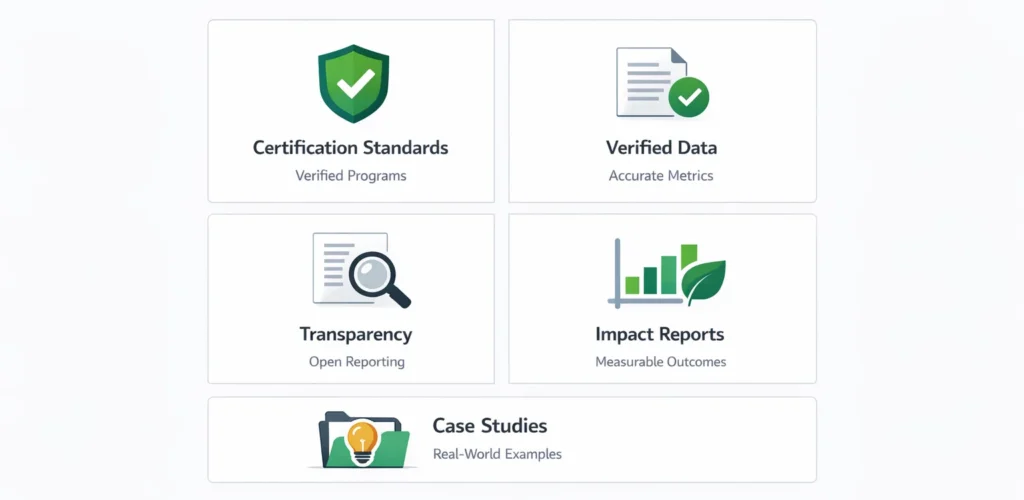
Certification proof
Project details
Impact data
Case studies
We recommend making everything visible.
Hidden data kills deals.
Common Challenges in Selling Carbon Credits
Let’s be real. This is not an easy market.
Challenges We See Daily:
Low buyer awareness
High competition
Complex compliance
Pricing pressure
Lack of visibility
And the biggest one:
No structured growth system
How SEO Circular Helps Scale Carbon Credit Sales
At SEO Circular, we don’t treat this like generic SEO.
We build structured acquisition systems.
1. Search Visibility Setup
We ensure your platform appears when buyers search.
Keyword mapping
SERP positioning
Global targeting
2. Content That Converts
We create content that explains complex concepts simply.
Because carbon credits are not easy to understand.
3. Lead Generation System
We build funnels that capture and convert traffic.
Landing pages
Forms
Buyer journeys
4. Authority Building
We position your platform as a trusted provider.
Backlinks
PR placements
Content clusters
5. Performance Tracking
We track:
Traffic
Rankings
Conversions
So decisions are data-driven.
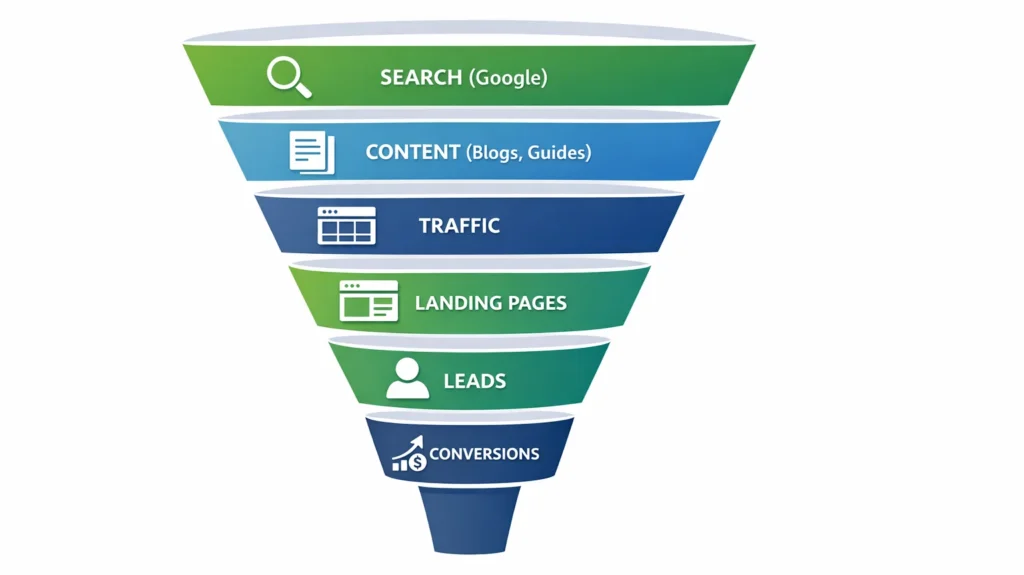
How a Typical Global Sales System Looks
Stage
Step Name
What Happens
Goal
Key Actions
1
Search
Potential buyers discover your platform through Google, search engines, or relevant queries.
Generate qualified traffic
SEO optimization, keyword targeting, ranking for high-intent queries
2
Content
Users consume your content (blogs, landing pages, guides) to understand your offering.
Build trust and educate users
Create high-quality content, answer user intent, showcase value clearly
3
Click
Interested users take action by clicking through to your platform or product pages.
Drive engagement and interest
Strong CTAs, compelling headlines, clear value proposition
4
Platform
Users land on your platform where they explore features, pricing, or credit systems.
Instead of relying on random marketing efforts, this structured system creates predictable, scalable, and repeatable growth by guiding users step-by-step through a clear conversion journey.
Turn Search Into Sales
We help carbon credit businesses attract high-value buyers through SEO that actually converts.